



For decades, men’s skincare lived in the shadow of convenience. A quick face wash in the shower, an aftershave splash, and perhaps a moisturizer borrowed from a partner were considered more than enough. Facials were perceived as indulgent, cosmetic, or reserved for women. That perception no longer holds. As we move into 2026, men’s facials are no longer optional—they have become a fundamental part of modern male self-care, health, and professional presence.
This shift is not driven by vanity. It is driven by environment, biology, lifestyle, and performance. Men today are exposed to more pollution, more stress, more digital fatigue, and faster aging triggers than any previous generation. Skincare has evolved accordingly, moving from superficial grooming to preventive and corrective care. The face, being the most exposed and expressive part of the body, has become a critical focus.
In cities like Bangkok—now recognized globally as a top wellness destination—the conversation around men’s facials has changed dramatically. They are no longer framed as luxury treatments but as intelligent maintenance, similar to haircuts, fitness routines, or dental care. In 2026, the question is no longer why men should get facials, but how often and from whom.
The Urban Environment Is Aging Men Faster Than Ever
Modern cities are hostile environments for skin. Air pollution, fine dust particles (PM2.5), exhaust fumes, UV radiation, and climate stress constantly attack the skin barrier. Men’s skin, while thicker than women’s, produces more sebum and is more prone to clogged pores and inflammation when exposed to pollutants. These particles settle into the skin daily, oxidizing on the surface and accelerating aging at a cellular level.
Cleansing alone is no longer sufficient to remove these deeply embedded impurities. Over time, pollution leads to dullness, enlarged pores, uneven texture, sensitivity, and premature wrinkles. In 2026, men living in large cities are not just facing cosmetic issues—they are dealing with chronic skin stress that affects comfort, confidence, and overall appearance.
Professional facials are designed to address this reality. Through deep cleansing, controlled exfoliation, oxygenation, and targeted hydration, expert-performed facials help restore the skin’s natural defense mechanisms. They remove what daily routines cannot, reset the skin, and significantly slow down environmental aging. In this context, skipping facials is no longer neutral—it is actively allowing damage to accumulate.
Stress Is Written Directly on the Face

Stress is one of the most underestimated contributors to skin aging in men. Long working hours, performance pressure, financial responsibilities, lack of sleep, and mental overload all trigger cortisol production. Elevated cortisol increases oil production, weakens the skin barrier, disrupts collagen synthesis, and slows down cellular repair. The result is skin that looks tired, inflamed, and older than its actual age.
In 2026, stress is not episodic; it is constant. Men are expected to perform at high levels professionally, socially, and personally, often without adequate recovery. The face becomes the first visible casualty. Dark circles, tension lines, jaw tightness, and dull complexion are no longer signs of age alone, but of chronic stress.
Professional men’s facials address both the physiological and neurological aspects of stress. Facial massage techniques stimulate blood circulation and lymphatic drainage, reducing puffiness and improving oxygen delivery to skin cells. At the same time, the nervous system is calmed through touch, rhythm, and controlled breathing, lowering cortisol levels. This dual action makes facials one of the rare treatments that improve both how a man looks and how he feels—immediately and long term.
Aging Is No Longer About Wrinkles Alone
Men age differently than women, but they age just as visibly. While men often develop wrinkles later due to thicker skin, once aging starts, it progresses faster and deeper. Collagen breakdown, loss of elasticity, sagging, and volume loss occur rapidly if not addressed early. In 2026, men are living longer, working longer, and remaining socially and professionally active well into their 50s, 60s, and beyond. Looking “tired” or “aged” is no longer acceptable or inevitable.
Preventive skincare has become the new standard. Just as men train their bodies before injuries occur, facials are now used to maintain skin health before visible damage becomes irreversible. Professional facials stimulate collagen production, improve muscle tone through manual techniques, and deliver active ingredients deeper into the skin where they actually work.
This is not about chasing youth. It is about maintaining a healthy, strong, and well-functioning skin structure that reflects vitality rather than exhaustion. In 2026, men who neglect facial care are not seen as natural—they are seen as outdated.
The Digital Lifestyle Has Created a New Skin Crisis
One of the most significant changes of the last decade is the dominance of digital life. Men spend hours every day in front of screens—computers, phones, tablets—often under artificial lighting. Blue light exposure has been shown to accelerate oxidative stress in the skin, leading to pigmentation, loss of elasticity, and premature aging.
At the same time, prolonged screen time reduces blinking, affects circulation, and contributes to facial tension, especially around the eyes, forehead, and jaw. This is why men in their 30s are now presenting skin concerns that were once typical of men in their late 40s.
Professional men’s facials in 2026 are adapted to this reality. Treatments focus on antioxidant protection, eye-area recovery, muscle relaxation, and cellular repair. Skincare formulations used by professionals are far more concentrated and effective than over-the-counter products, making them essential in counteracting digital damage.
Ignoring this new reality is no longer an option for men who want to remain sharp, present, and confident in a digital-first world.
Why Professional Expertise Matters More Than Ever
The explosion of skincare products marketed to men has created confusion rather than clarity. Social media trends, influencer advice, and generic routines often encourage men to over-cleanse, over-exfoliate, or use products unsuited to their skin type. This leads to irritation, imbalance, and long-term damage.
In 2026, the value of professional expertise has become central. A men’s facial performed by trained specialists is not a standardized treatment; it is a diagnostic and corrective experience. Skin is analyzed, lifestyle factors are considered, and treatments are adapted accordingly. This level of precision cannot be replicated at home.
At TWENTY.TWO CUT, men’s facials are designed specifically for male skin and male lifestyles. The approach is clinical yet relaxing, results-driven yet discreet. Premium skincare is used not for branding purposes, but for efficacy, safety, and long-term skin health. In 2026, men increasingly understand that expertise matters more than hype.
Facials as Part of Modern Masculinity
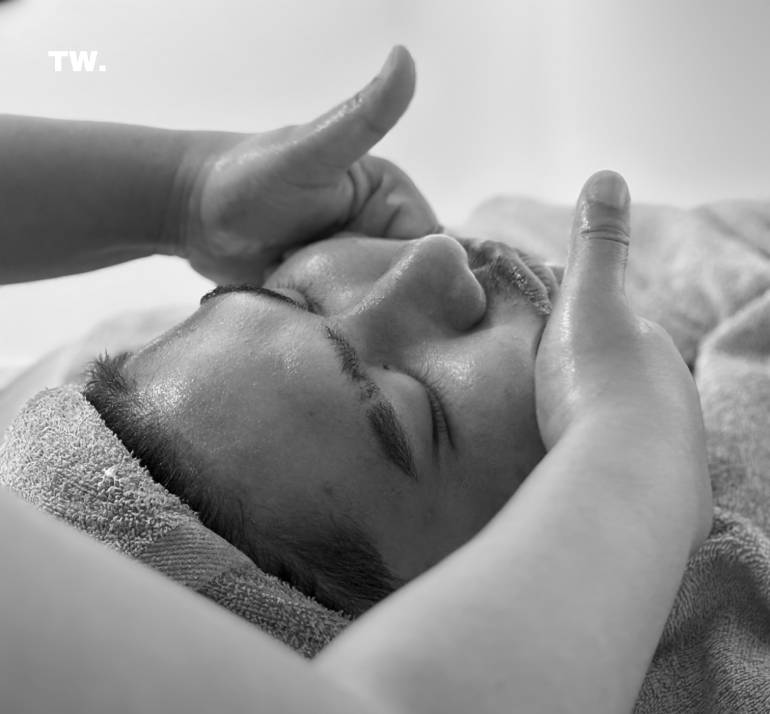
Perhaps the most profound change is cultural. Masculinity in 2026 is no longer defined by neglecting oneself. Strength is now associated with discipline, self-awareness, and care. Just as men proudly invest in fitness, nutrition, and mental health, skincare has joined the same category of responsible self-maintenance.
Men’s facials are no longer about appearance alone. They are about readiness, presence, and longevity. A healthy face communicates clarity, confidence, and control. In professional environments, first impressions are made in seconds, and the face plays a decisive role. In personal life, taking care of oneself is increasingly seen as attractive, not indulgent.
The stigma is gone. What remains is a clear understanding that neglecting skin health has consequences, while maintaining it brings tangible benefits.
Why 2026 Marks the Point of No Return
The convergence of pollution, stress, aging science, and digital exposure has made men’s facials essential rather than optional. In 2026, skincare is no longer reactive; it is strategic. Men who incorporate professional facials into their routine are not seeking luxury—they are investing in resilience.
This shift mirrors what happened with fitness decades ago. There was a time when gyms were seen as optional or superficial. Today, physical training is understood as a foundation of health. Men’s facials are following the same trajectory. They are becoming a standard pillar of modern male care.
In a world that demands more from men than ever before, the face is not just skin—it is an interface between inner performance and outer perception. Taking care of it professionally is no longer a choice driven by trends. It is a necessity dictated by reality.
In 2026, men’s facials are not about doing more. They are about aging better, performing better, and living better.